Private Advisory · Healthcare Vertical SaaS & RCM Services

You built something that works.
But right now, you are the system.

Most healthcare SaaS and services founders hit $1M and keep selling. They hit $2M and keep selling. By $3M they know something is wrong — but they can't stop long enough to fix it.

Private advisory for founders of healthcare vertical SaaS, AI, and RCM services companies navigating the valley of death between $1M and $5M.

Request a Conversation
Field Memos

Short, direct notes on what actually holds up when you're navigating growth and high-stakes revenue decisions in healthcare and vertical B2B markets.

If This Is You

The valley of death is real. And it's where most companies stall and stay there if they're lucky — or die slowly.

At $1M you were scrappy and it worked. At $3M you're stretched thin and it's starting to show. The deals that close are the ones you're in. The ones you're not in — drag or stall. You know it won't scale. You just haven't found the time to fix it.

Patterns That Bring Founders Here
  • You're in every meaningful deal and you know it
  • Your team can't replicate what you do in a room
  • Pipeline looks active but conversion is founder-dependent
  • You've tried hiring your way out of it — it didn't hold
  • Healthcare buyers stall in procurement and you don't know why
  • You're repositioning around AI or selling AI solutions — but differentiating is tough and deals are stalling
  • You're between $1M and $5M and the next move isn't clear
The Core Problem
"You can't read the label when you're inside the bottle."

When you're the founder, the seller, and the operator — you can't see what's actually driving results. Or where the risk is building. The signals are there. You just can't read them from inside.

That's not a weakness. It's physics.

Why This Is Different

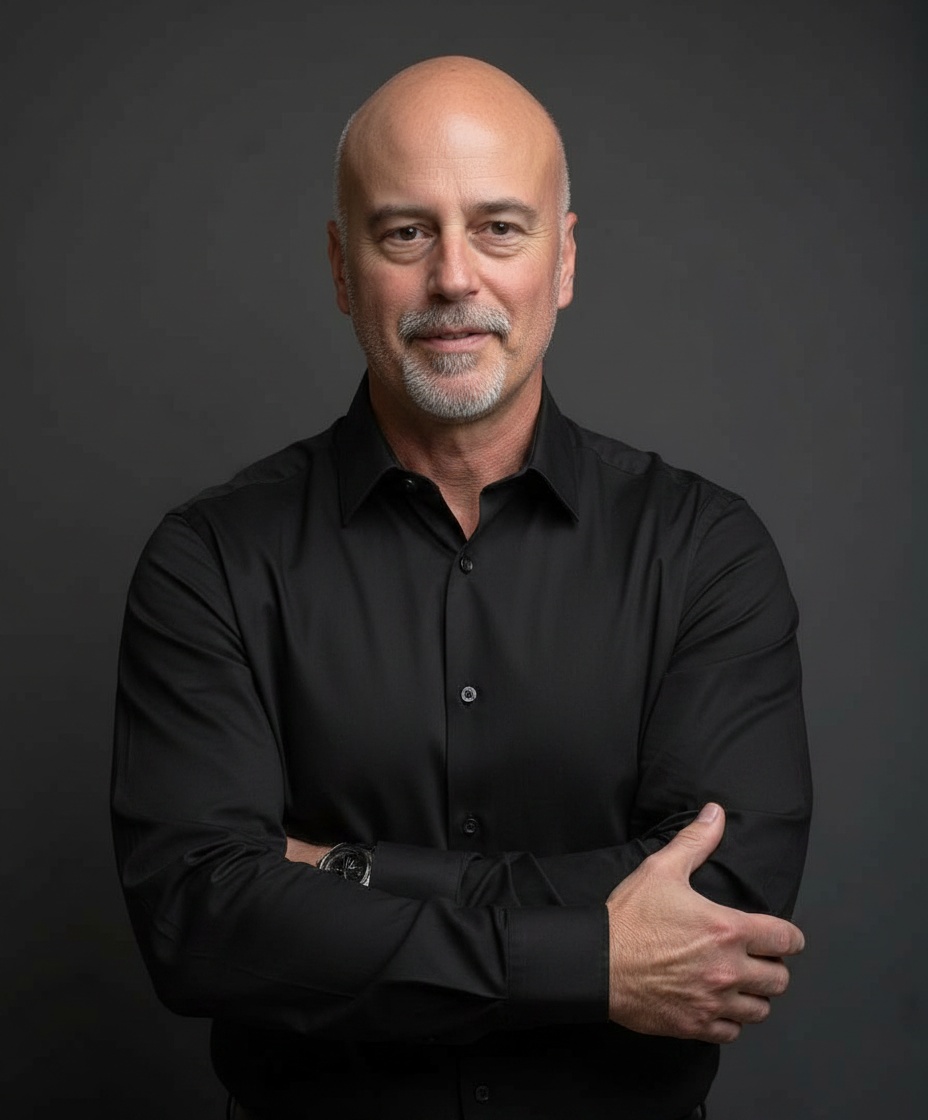
I've been on the inside of this market. Not studying it. Building in it.

Inside the markets your buyers operate in — where deals stall, risk shows up late, and bad decisions cost real money. That includes building, scaling, and exiting a national healthcare revenue cycle management services company. I know where deals go to die in healthcare procurement because I've lost them there. And I know what it looks like when a founder-led sales motion stops scaling — because I've lived through it.

1990s

Healthcare Software and Vertical Staffing Software

Selling workflow displacement before the category had a name. Buyers who didn't know they needed it. I learned early what it costs to be wrong about a deal you thought was close.

Early 2000s

Enterprise IT Infrastructure

Complex enterprise sales as the internet redefined every assumption about how organizations bought technology. Long cycles. Committee decisions. Internal politics that killed deals that should have closed.

2000s–2014

Built & Exited a National Healthcare RCM Company

I didn't advise a healthcare company. I built one.

Co-founded, scaled, and exited a national healthcare revenue cycle management services company. For over a decade, I operated inside the exact market your buyers live in. Payroll on the line. Client relationships on the line. Personal capital on the line. Every quarter.

I know what it feels like when a deal you need doesn't close. When a key client relationship starts to wobble. When the team you built isn't carrying the number and you're not sure if it's them or you.

That's not something you learn from the outside. That's something that costs you.

Each of those cycles looked different on the surface. The underlying dynamics — founder dependency, buyer resistance, category disruption, team scaling — were identical. What I bring isn't a framework. It's decades of learning what works when real money is on the line.

The $1M–$5M Problem

The valley of death isn't about revenue.
It's about what got you here not being able to get you there.

Between $1M and $5M, most healthcare SaaS and services companies hit the same wall. The founder is the sales motion. The team is orbiting it. Nothing moves unless you're involved — and you already know that's not sustainable.

So you hire. It doesn't hold. You build a process. It doesn't stick. You hand off a deal. It stalls. And every quarter you tell yourself next quarter you'll fix it — but next quarter you're still in every deal.

The trap tightens because no one has actually looked at what's real versus what just looks like progress. Not the pipeline number. Not the activity. What's actually real.

That's where I come in.

I don't come in with a playbook. I come in with decades of hard-learned experience and a structured working session designed to tell you what's actually happening inside your revenue engine before you make your next expensive decision.

The founders who get through the valley of death don't do it by working harder. They do it by making one or two better decisions at the right moment — usually with someone in the room who has been through it before.

Where Most Conversations Start

The Mercury Test Audit.

Most companies don't need more advice. They need an accurate diagnosis.

The Mercury Test is a structured 90-minute working session — not a pitch, not a presentation — designed to identify what's actually driving results inside your revenue engine before any decisions about what to change.

We look at where deals are real, where they're not, and why.

You leave with a written report. Some founders use it internally. Others decide to engage more deeply. Both outcomes are fine.

Learn About the Mercury Test →
How It Works
  • 01
    Request a ConversationBrief intake to confirm fit and context. No forms. No qualification theater.
  • 02
    90-Minute Working SessionDirect examination of your revenue engine — pipeline, execution, founder dependency, team dynamics, buyer patterns.
  • 03
    Mercury Test ReportWritten findings: what's actually happening, where risk is building, what matters most right now.
  • 04
    Decide What's NextIf deeper engagement makes sense, we define it together. If it doesn't, you have the report.
For Founders Who Go Deeper

There's a second body of work I use in conversations.

It's not broadly distributed. It's an operating-level resource — the kind of material that only makes sense once we've had a real conversation about what's actually happening in your business.

It's earned its way into most serious conversations I've had. The founders who've seen it don't ask for a framework after that.

Available after initial conversation. Not for general distribution.
"If this sounds like something worth earning — that's the right instinct."
Request a Conversation
Field Memos

What actually holds up when theory breaks.

Field Memos are not marketing posts. They're the kind of direct thinking founders share with their teams when something finally explains what they've been seeing.

No generic advice. No frameworks borrowed from someone else's war. Written specifically for founders navigating complex healthcare and vertical B2B markets under pressure.

Read Field Memos →
Recent Memos
  • Pipeline Your Pipeline Is Lying to You (And AI Is Making It Worse)
  • Discovery Discovery Is the Deal — Not the Setup for the Deal
  • AI What the AI Vendors Aren't Telling Healthcare SaaS Founders
  • Valley Why the $1M–$5M Stall Isn't a Sales Problem
  • Forecast Why Your Forecast Is a Fiction You Agreed to Believe
Field Memos · Direct to Your Inbox

These aren't marketing posts. They're the kind of notes founders share when something finally explains what they've been seeing.

Field Memos go out when there's something worth saying — not on a publishing calendar. If you're building a healthcare SaaS or services company between $1M and $5M, these will feel uncomfortably familiar.

No frequency commitments. No sales sequences. Unsubscribe anytime.

Holding It Together
The Book

Holding It Together

Field Notes on Judgment and Decision-Making in Complex B2B Environments

Most B2B sales problems aren't execution problems. They're judgment problems. Judgment about when to push and when to wait. When discovery is real and when it's theater. When a deal is alive and when it's already dead and nobody's said it yet.

This isn't a sales playbook. It's what decades of field experience — the kind that cost something — actually produces. For the founder who's done with frameworks and needs to think more clearly under pressure.

Get It on Amazon →
Ready to Talk

If you're the only one who can close
and you know it won't scale —
we should talk.

Most work begins through private introductions. Some founders reach out directly. Either way, the first conversation is just that — a conversation. Not a pitch. Not a qualification call. A direct look at what's actually happening.

Request a Conversation